
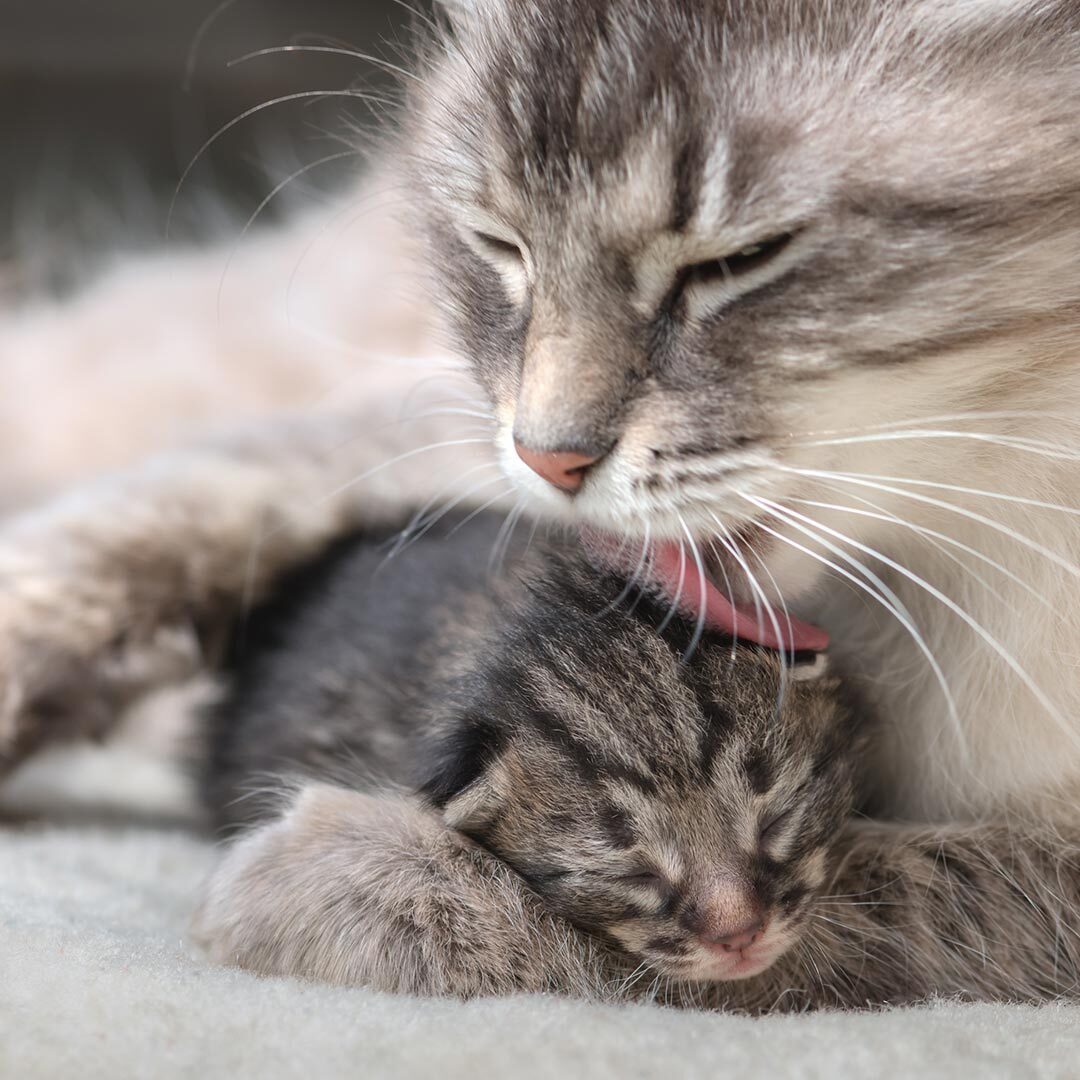
Why Is Veterinary Care Important Right After Birth?
Even when delivery goes smoothly, a veterinary exam shortly after birth helps confirm that both the mother and litter are doing well.
A postpartum visit — ideally within 24 hours — allows us to:
-
Check for retained puppies, kittens, or placentas
-
Evaluate the mother’s recovery and milk production
-
Examine each puppy or kitten for defects or early illness
-
Identify concerns before they become urgent
Common Concerns in Newborn Litters
Some issues can develop quickly in newborns and require prompt attention.
Common concerns include:
-
Fading puppies or kittens (failure to thrive)
-
Diarrhea or constipation
-
Dehydration or poor nursing
-
Temperature instability (too cold or too warm)
Environmental factors also matter. The nesting area should be clean, dry, and kept at an appropriate temperature. If the mother is unwell or not producing adequate milk, the litter may need additional support.
Monitoring the Mother After Delivery
The mother’s health directly affects the survival and growth of the litter.
Daily checks should include:
-
Appetite, water intake, and energy level
-
Vaginal discharge (which should gradually decrease over time)
-
Mammary glands for softness, warmth, and normal milk production
-
Signs of discomfort, fever, or unusual odor
Postpartum complications can include infection, mastitis, low calcium levels, or retained tissue. If anything seems abnormal, early veterinary care is important.
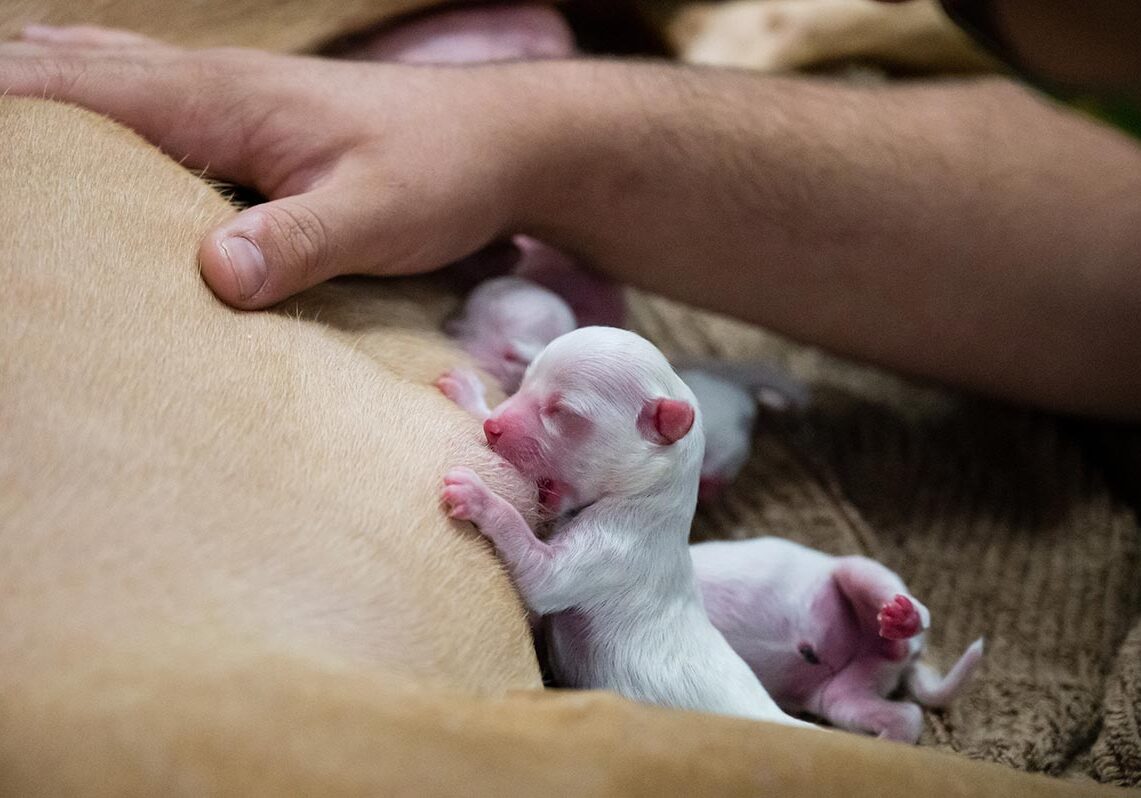
When Should You Contact Our Veterinarian?
Reach out if you notice:
-
A puppy or kitten not gaining weight
-
Weakness, lethargy, or constant crying
-
Abnormal discharge or odor from the mother
-
Swollen, hard, or painful mammary glands
-
Signs of dehydration or poor nursing
These changes can progress quickly, so early intervention makes a difference.
Additional Early-Life Veterinary Care
In the first weeks of life, veterinary care may also include:
-
Tail docking or dewclaw removal (when appropriate for the breed, typically within 3–5 days)
-
Guidance on early neurologic stimulation programs
-
Nutritional support for smaller or struggling newborns
-
Ongoing monitoring as the litter grows and develops
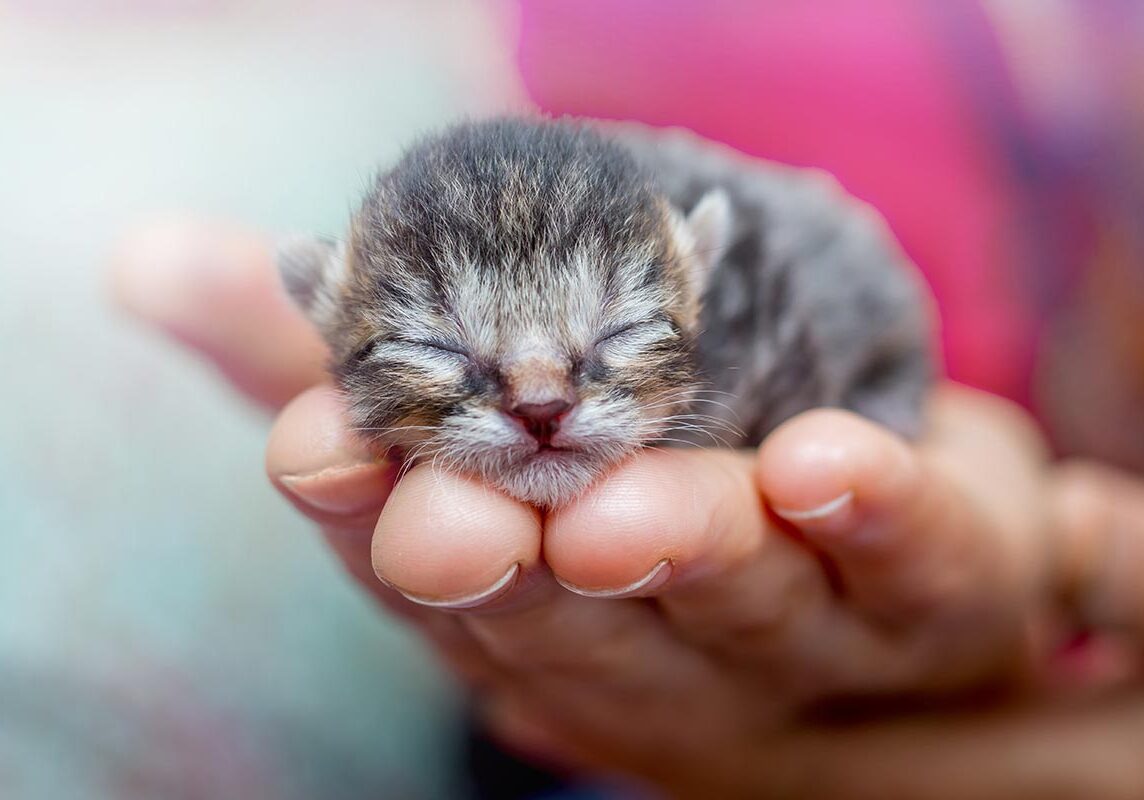
Support From the Very Beginning
Caring for a newborn litter comes with a lot of responsibility, especially in those first few weeks. Having veterinary guidance during this time helps you respond quickly to changes and support healthy development.
If your pet has recently delivered or you have concerns about a newborn litter, we’re here to help you navigate the next steps.
Call (863) 644-6634 or request an appointment online to schedule neonatal care.